
Explore the stories, technologies and achievements that make Tempur-Pedic® the most highly recommended mattress brand in America*.
Explore the stories, technologies and achievements that make Tempur-Pedic® the most highly recommended mattress brand in America*.
— by Tempur-Pedic on Jul 14, 2026
Choosing the right mattress is a personal decision that directly affects sleep quality, physical comfort, and how well you function day to day. Two of the most popular options today are foam mattresses and hybrid mattresses, each offering distinct benefits. If you are deciding between these two types, understanding how they differ in construction, feel, and performance can help you determine which is the better fit for your sleep needs.
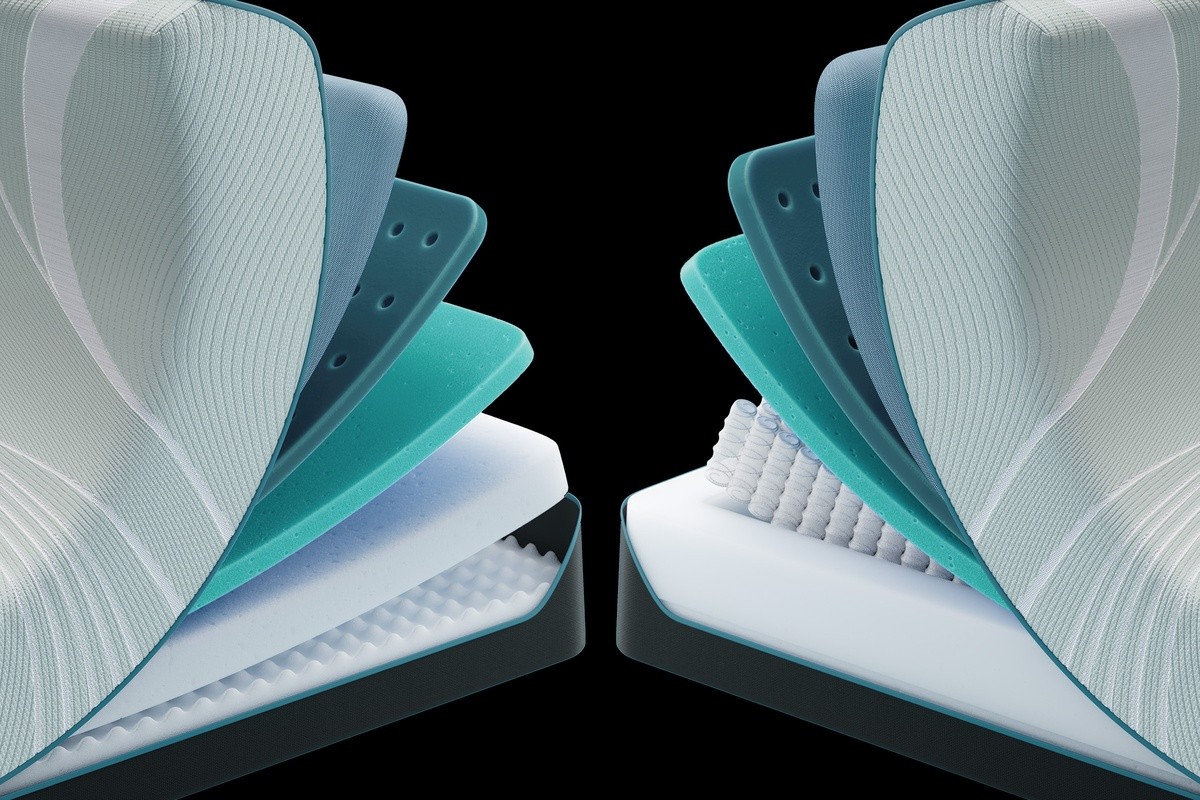
Foam mattresses are constructed entirely from layers of foam, which may include memory foam, polyurethane foam, or latex. They are best known for their ability to closely contour to the body, adapting to an individual’s shape, weight, and sleeping position. This contouring helps distribute pressure evenly and support spinal alignment.
Advanced foam technologies such as TEMPUR‑Material® feature an open‑cell structure designed to respond to body heat, weight, and shape. As the body rests on the mattress, the material gradually softens and reshapes, continuously adapting throughout the night. This characteristic helps reduce pressure points, limit tossing and turning, and minimize motion transfer — an important consideration for couples.
Unlike some traditional memory foams that allow excessive sinkage or become uncomfortably firm in cooler environments, TEMPUR‑Material® is engineered to maintain consistent support while still providing pressure relief. The material responds primarily to body heat rather than room temperature, helping create a more stable and predictable sleep surface night after night.
Foam mattresses may be a good fit if you:
Hybrid mattresses combine two construction methods: a coil-based support system paired with multiple layers of foam on top. The goal of a hybrid mattress is to balance contouring comfort with structured, responsive support.
The coil system provides durability, airflow, and a more responsive feel, while the foam layers contribute pressure relief and motion isolation. This combination appeals to sleepers who want support and stability without sacrificing comfort.
Many hybrid mattresses are designed to accommodate a wide range of sleep styles. For example, TEMPUR-Adapt® and Breeze® mattresses feature premium innersprings combined with legendary TEMPUR-Material®, offering targeted support alongside adaptive comfort. This type of construction is intended to feel supportive without feeling rigid, providing comfort without excessive sinking.
Hybrid mattresses typically come at a higher price point than all-foam mattresses, and they are often heavier. However, the added structure and versatility can make them a worthwhile investment for the right sleeper.
Hybrid mattresses may be a good fit if you:
To determine which mattress type is the better fit, consider how you sleep and what you value most in a mattress.
There is no universally “better” mattress — only the option that best supports your individual sleep needs. By considering factors such as sleep position, body comfort, movement during the night, and whether you share your bed, you can more confidently decide whether a hybrid or foam mattress is the better fit for you!
Side sleepers often benefit from a foam mattress because it can conform closely to the shoulders, hips, and lower back, helping relieve pressure points. Tempur-Pedic foam mattresses use TEMPUR-Material® to adapt to your body and provide personalized support throughout the night.
Neither mattress type is universally better. A hybrid mattress offers a balance of responsive support and cushioning comfort, while a memory foam mattress focuses more on pressure relief and motion isolation. The best choice depends on your sleep position, comfort preferences, and support needs.
Tempur-Pedic foam mattresses are built with layers of adaptive TEMPUR-Material® that contour closely to the body. Tempur-Pedic hybrid mattresses combine TEMPUR-Material® with premium innersprings to provide responsive support, pressure relief, and easier movement.
Yes. Hybrid mattresses combine supportive coils with comfort layers designed to cushion key pressure points. Tempur-Pedic hybrid mattresses pair premium innersprings with TEMPUR-Material® to help reduce pressure while maintaining responsive support.
Both mattress types can be good options for couples. Foam mattresses typically excel at reducing motion transfer, while hybrid mattresses provide additional responsiveness and support. Tempur-Pedic mattresses are designed to help minimize disturbances caused by a partner's movement.
Modern foam mattresses are designed with advanced materials and cooling technologies to help regulate temperature. Tempur-Pedic offers cooling collections, including TEMPUR-Breeze®, that are engineered to help sleepers stay cooler throughout the night.
Yes. Combination sleepers who frequently switch positions often prefer hybrid mattresses because they provide a balance of cushioning comfort and responsive support, making movement easier throughout the night.
The best mattress for back pain depends on individual needs and preferences. Many sleepers find that a mattress offering both support and pressure relief helps promote proper spinal alignment. TEMPUR-Material® is designed to adapt to your body's shape and weight to provide personalized support.
You’re using an unsupported web browser.
A list of the most popular browsers can be found below. Just click on an icon to visit the download page.
Your phone or tablet is using software unsupported by our website. To improve your shopping experience, please update your device to the latest version of iOS or Android OS.


